
El Niño: The Climate Giant Reshaping Our World
November 18, 2026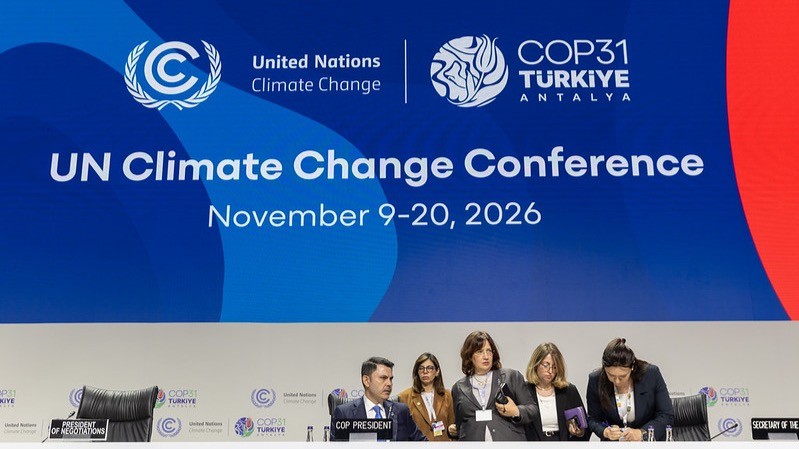
COP31: From commitments to implementation
Climate change remains one of the most pressing global challenges of our time. Rising temperatures, changing rainfall patterns, droughts, flooding, biodiversity loss and environmental degradation continue to affect ecosystems, economies and livelihoods across the world. These impacts threaten food security, public health, water resources and sustainable development, making international cooperation essential.
From 9 to 22 November 2026, world leaders, policymakers, scientists, climate activists, businesses and civil society organisations gathered in Antalya, Türkiye, for the 31st Conference of the Parties (COP31) to the United Nations Framework Convention on Climate Change (UNFCCC).
The conference provided a platform for countries to discuss responses to the climate crisis, strengthen existing commitments and advance practical climate action. While several agreements and initiatives emerged from the negotiations, some important issues remained unresolved (UNFCCC, 2026).
Beyond the discussions and agreements, an important question remains: How will the outcomes of COP31 translate into meaningful improvements in people’s lives and the protection of the environments they depend on?
What is COP31 and Why Does It Matter?
COP31 is the 31st Conference of the Parties to the United Nations Framework Convention on Climate Change (UNFCCC), the annual global climate summit taking place in Antalya, Türkiye, in November 2026. It brings together governments, businesses, civil society organisations and other stakeholders to negotiate and advance international action on climate change (UNFCCC, 2026a).
Since the first COP in 1995, these conferences have helped shape global climate agreements, including the 2015 Paris Agreement, which aims to limit global warming to well below 2°C and pursue efforts to keep it to 1.5°C. Key issues at COP31 include reducing greenhouse gas emissions, adapting to climate impacts such as floods and droughts, mobilising climate finance for developing countries, and ensuring a fair transition away from fossil fuels (UNFCCC, 2026b)
COP31 matters because climate change is a global challenge that requires coordinated action. Its focus on moving from commitments to implementation highlights the need to turn international promises into practical solutions that protect communities, strengthen livelihoods, support food security and accelerate the transition to clean energy. Although one conference cannot solve the climate crisis, the decisions and commitments made at COP31 can influence how countries respond to its impacts.
Major issues being discussed at COP31?
Climate change affects agriculture, energy, public health, water resources, forests, biodiversity and livelihoods. At COP31, discussions focused on key areas requiring urgent global attention and stronger cooperation. These included:
1. Keeping the 1.5°C Goal Within Reach
Limiting global warming to 1.5°C remained a major concern. Discussions highlighted the risks of exceeding this threshold, including more frequent and severe floods, droughts, heatwaves and other climate impacts. Stronger emission reductions and faster climate action were identified as essential to keeping the goal within reach (UNFCCC, 2026).
2. Climate Finance
Countries discussed the need to increase climate finance, particularly for developing countries that face significant climate risks but have limited resources. Adaptation finance needs are estimated at US$305 billion annually up to 2035. Discussions also highlighted the need to at least triple adaptation finance by 2035 and improve access to predictable funding (UNFCCC, 2026).
3. Climate Adaptation and Resilience
Strengthening communities’ ability to cope with climate impacts was another important issue. Discussions covered improved early-warning systems, stronger national adaptation plans, ecosystem restoration, sustainable land management and climate-resilient livelihoods. Greater attention was also given to locally led adaptation that reflects the experiences and needs of affected communities (UNFCCC, 2026).
4. Loss and Damage
Countries also addressed the need to support communities experiencing climate-related losses that cannot be prevented through adaptation. These include destroyed homes, damaged infrastructure, lost livelihoods, displacement and ecosystem damage. The discussions highlighted the funding gap, with approximately US$2.8 billion in funding requests compared with US$342 million in allocations under the Barbados Implementation Modalities (UNFCCC, 2026).
5. Just Transition
The transition to cleaner energy featured prominently, with attention to renewable energy, energy efficiency and access to affordable electricity. Discussions included a proposed target to increase electricity’s share of global final energy consumption to 35% by 2035. However, the absence of explicit language on transitioning away from fossil fuels in the revised text attracted criticism from climate campaigners (UNFCCC, 2026; Premium Times, 2026).
6. Forest Conservation and Ecosystem Restoration
The role of forests and other natural ecosystems in addressing climate change was also recognised. Discussions focused on halting and reversing deforestation and forest degradation by 2030, protecting biodiversity, restoring degraded ecosystems and promoting sustainable management of natural resources (UNFCCC, 2026).
7. Second Global Stockstake
The second Global Stocktake (GST2) was initiated at COP31 as part of the Paris Agreement’s process for assessing collective progress on climate action. It will evaluate how far countries have advanced in meeting climate commitments and identify gaps requiring stronger action and international cooperation. The process involves three stages: information collection, technical assessment and consideration of outputs, with its outcome expected at COP33 in November 2028.
8. Technology and Transparency
Discussions focused on strengthening technology transfer, research and capacity building to help developing countries implement climate commitments. Countries also addressed transparency in climate reporting, emphasising the need for reliable data, clear progress tracking and accountability in meeting national climate targets. These efforts are important for ensuring that climate support reaches countries that need it and that commitments translate into measurable results (UNFCCC, 2026).
Major Decisions Reached at COP31
COP31, held in Antalya, Türkiye, concluded on 22 November 2026 after extended negotiations. The conference recorded progress on several formal negotiating issues and practical climate initiatives. However, countries failed to reach consensus on the overarching Presidency-Led Cover Decision, commonly referred to as the proposed Antalya Pact (UNFCCC, 2026; Carbon Brief, 2026).
1. Just Transition
Countries agreed to extend the UAE Just Transition Work Programme for another three years. They also agreed to operationalise the Just Transition Mechanism in phases to promote international cooperation, technology sharing, technical assistance and capacity building. Its adoption is expected at COP32.
2. Climate Finance
Negotiations advanced the Climate Finance Work Programme, with renewed efforts to increase adaptation finance and make funding more accessible. Work also continued on transitioning the Adaptation Fund to serve the Paris Agreement exclusively.
3. Climate Adaptation
Countries advanced work on the 59 Belém Adaptation Indicators, establishing a dedicated task force to improve their methodologies and support countries in measuring adaptation progress. They also reinforced the Baku Adaptation Roadmap (2026–2028).
4. Loss and Damage
Decisions strengthened the work of the Warsaw International Mechanism and Santiago Network, with emphasis on improving access to technical assistance, simplifying support requests and reaching vulnerable communities experiencing climate-related losses.
5. Climate Technology
Countries agreed to advance the Belém Technology Implementation Programme and strengthen support for developing countries to access and deploy climate technologies.
6. Transparency and Global Stocktake
Countries advanced guidance to support climate reporting, particularly for developing countries preparing their Biennial Transparency Reports. The second Global Stocktake was also launched to assess collective progress under the Paris Agreement. Its process is expected to conclude at COP33 in 2028.
7. Electrification and Climate Action
Outside the formal negotiations, the Global Climate Action Agenda recorded progress in electrification, clean energy and investment. Countries representing around half of the global economy supported the 35-by-35 goal of increasing electricity’s share of global final energy consumption to 35% by 2035 (UNFCCC, 2026).
Why did COP31 fail to reach an overarching agreement?
Despite these achievements, countries could not agree on the Presidency-Led Cover Decision. The main disagreements concerned the inclusion of clear language on transitioning away from fossil fuels and the provision of climate finance. The proposed Antalya Pact was rejected, with the European Union, the United Kingdom and several climate-vulnerable countries opposing the final text because they considered it insufficiently ambitious (Carbon Brief, 2026; IISD, 2026).
Nigeria’s Contribution to COP31
Nigeria participated in COP31 through a delegation led by the Minister of Environment, Balarabe Abbas Lawal. The country made contributions through its national statement, climate negotiations and bilateral engagements, focusing on the following priorities:
- Climate finance: Nigeria called for increased concessional financing, lower borrowing costs and timely access to the Loss and Damage Fund, emphasising that developing countries cannot rely on domestic resources alone to meet climate financing needs.
- Energy transition: Nigeria advocated for a just and orderly energy transition that considers its energy security, development priorities and need for affordable electricity.
- Climate commitments: The country reaffirmed its NDC 3.0 target of reducing greenhouse gas emissions by 32.2% by 2035, relative to 2018 levels, and its ambition to achieve net-zero emissions by 2060.
- International partnerships: Nigeria advanced discussions on energy security and transition partnerships, including engagements with the United Kingdom.
- Indigenous innovation: Nigerian renewable energy innovation, including a solar-powered backpack, was showcased during the conference.
Beyond government negotiations: What role do communities and environmental organisations play?
Climate action cannot be achieved through government commitments alone. Environmental organisations, community groups, schools, businesses, researchers and individuals all have important roles in translating international climate priorities into measurable interventions.
Their contributions include environmental education, community-based adaptation, climate justice advocacy, research and documentation, forest conservation, biodiversity protection and sustainable livelihoods.
For environmental organisations, this means moving beyond awareness campaigns to support practical solutions that address local environmental challenges. Communities should participate in identifying problems, developing interventions and monitoring results.
The Way Forward
COP31 made progress on several climate priorities, but the failure to reach agreement on the Presidency-Led Cover Decision shows that important disagreements remain, particularly around fossil fuels and climate finance. The priority now is to turn the decisions reached into practical action and address the issues that remain unresolved.
1. Strengthening implementation: Countries should translate the outcomes of COP31 into national policies, development plans, budgets and measurable climate programmes rather than allowing commitments to remain on paper.
2. Improving access to climate finance: Developed countries and financial institutions should provide more accessible and predictable funding to support adaptation, mitigation and loss and damage, particularly in vulnerable developing countries.
3. Accelerating a just energy transition: Governments should expand renewable energy, improve electricity access and support workers and communities affected by the transition from fossil fuels.
4. Supporting local climate action: National commitments must translate into practical interventions at state and community levels, including climate-resilient agriculture, flood management, environmental education, forest conservation and ecosystem restoration.
5. Strengthening accountability: Countries should improve climate reporting, monitor their commitments and demonstrate measurable progress in reducing emissions and building resilience.
6. Addressing unresolved issues: Countries must continue negotiations on fossil fuel transition, climate finance and other outstanding matters to build consensus ahead of future climate conferences.
References
- Carbon Brief. (2026, November 23). COP31: Key outcomes agreed at the UN climate talks in Antalya.
- Federal Ministry of Environment. (2026, November 11). National statement by H.E. Balarabe Abbas Lawal at the World Leaders’ Summit of COP31.
- International Institute for Sustainable Development (IISD). (2026). COP 31 Sees Launch of Platform Linking Food Security, Water, Climate Action. SDG Knowledge Hub.
https://sdg.iisd.org/news/cop-31-sees-launch-of-platform-connecting-food-security-water-management-and-climate-action/ - International Institute for Sustainable Development (IISD). (2026, November 22). COP31 ends without Antalya Pact—Time to rebuild trust.
- NAP Global Network. (2026, November 20). Nigeria launches National Adaptation Plan at COP31, inviting global partners to turn strategies into action by investing in resilience.
- Premium Times. (2026, November 19). COP31: Revised draft draws criticism over retreat on fossil fuel transition. https://www.premiumtimesng.com/news/top-news/926492-cop31-revised-draft-draws-criticism-over-retreat-on-fossil-fuel-transition.html
- United Nations Development Programme (UNDP). (2026). Nigeria: Climate Promise – Nigeria’s third NDC.
https://climatepromise.undp.org/what-we-do/where-we-work/nigeria - United Nations Framework Convention on Climate Change (UNFCCC). (2015). The Paris Agreement.
https://unfccc.int/sites/default/files/english_paris_agreement.pdf - United Nations Framework Convention on Climate Change (UNFCCC). (2026). About COP31.
https://unfccc.int/cop31/about - United Nations Framework Convention on Climate Change (UNFCCC). (2026, November 19). Presidency-led Party-driven cover decision: Unedited draft text. https://unfccc.int/sites/default/files/resource/Upload_dt_cop31_cover_decision.pdf
- United Nations Framework Convention on Climate Change (UNFCCC). (2026, November 23). COP31 delivers important progress across negotiations and Action Agenda, advancing implementation, but fails to agree Presidency-Led Decision
- World Bank Group. (2021). Climate Risk Country Profile: Nigeria.
https://climateknowledgeportal.worldbank.org/sites/default/files/2021-07/15918-WB_Nigeria%20Country%20Profile-WEB.pdf
Written by: Semilore Adeniran