
Our June 2026 Newsletter is here!
July 8, 2026
2026 HALF YEAR IMPACT REPORT
July 21, 2026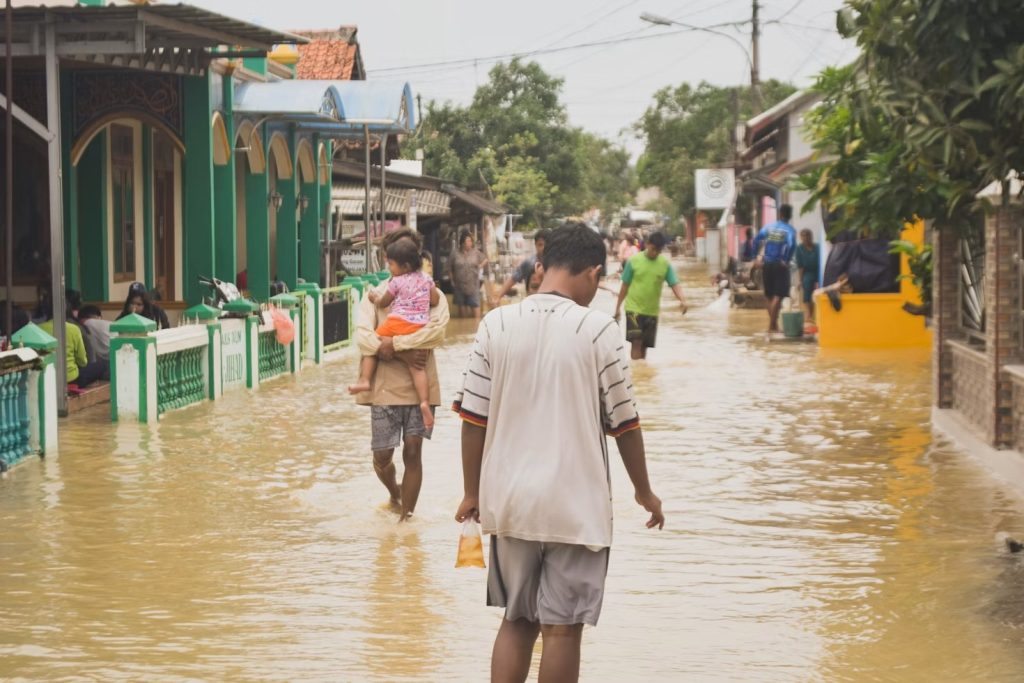
BUILDING FLOOD RESILIENT NIGERIAN CITIES: WHAT CAN WE LEARN BEFORE THE NEXT DISASTER?
Every rainy season, flooding disrupts lives across Nigeria. Homes are destroyed, roads become impassable, businesses suffer, thousands of families are displaced. Beyond damaging infrastructure, it contaminates drinking water, spreads diseases such as cholera and malaria, disrupts healthcare services, affects mental well-being, economic hardship and threatens food security. Building flood-resilient cities can significantly reduce the impacts of flooding while contributing to safer, healthier, and more sustainable communities (WHO, 2022)
The 2022 rainy season brought the most devastating flood crisis Nigeria had seen in over a decade. According to the United Nations Children’s Fund (UNICEF), the floods affected roughly 4.4 million individuals, forcing 2.4 million people to flee their homes and seek temporary refuge in makeshift internally displaced persons (IDP) sites like schools and health clinics. The National Emergency Management Agency (NEMA) confirmed 612 fatalities and the partial or total destruction of over 300,000 homes across 34 of Nigeria’s 36 states (OCHA 2022).
WHAT DOES A FLOOD RESILIENT CITY LOOKS LIKE?
A flood-resilient city coexists with water rather than fighting it. It utilizes “sponge” features like permeable pavements, rain gardens, and restored wetlands to absorb excess rain. Instead of relying solely on concrete, it transforms urban spaces like parks and sports fields into temporary flood basins during severe storms.
Building this resilience requires a mix of structural engineering and community preparedness, such as proper waste management to prevent drainage blockages. For instance, cities are increasingly adopting strategies like those outlined in the Creating a flood resilient city report by ReliefWeb to transition from emergency response to systemic resilience. The session focused on the multi-dimensional approaches required in achieving resilient infrastructure. Highlighting success stories of governments, such as Japan and India, resilience requires continuous learning for improvement in systems, and early investments to ensure infrastructure is resilient (IFRC, 2024).
One of the key remarks that particularly resonated was by Christiana Figueres, a world authority on global climate change, who emphasized the need to gain knowledge of “Mapping, Pricing & then Build-it,” prior to undertaking any infrastructure or reconstruction projects.
DIAGRAM OF A VULNERABLE CITY AND A FLOOD RESILIENT CITY
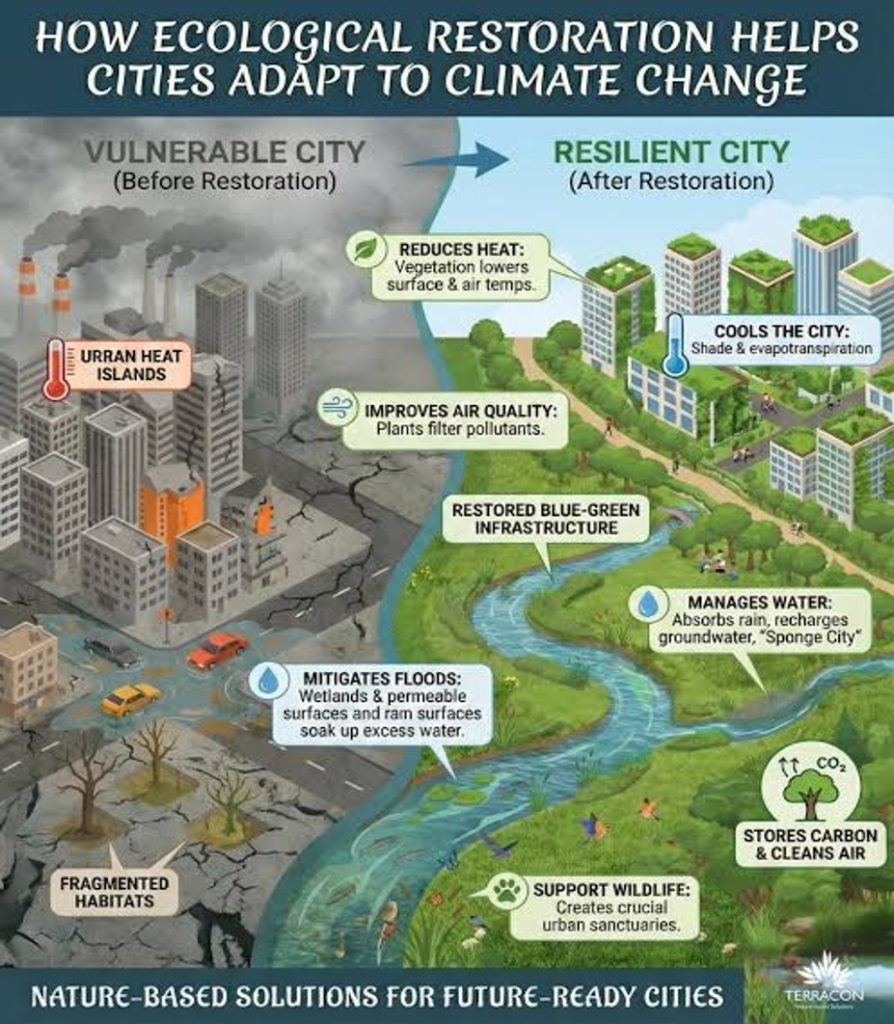
The illustration above highlights the difference between a city that is vulnerable to flooding and one that is designed to withstand climate impacts. On the left, poor land management, limited green spaces, and extensive concrete surfaces trap heat, reduce water absorption, and increase the risk of flooding. On the right, ecological restoration transforms the urban landscape through nature-based solutions such as urban forests, wetlands, green roofs, permeable pavements, and restored waterways. These interventions help absorb and store excess rainwater, reduce urban heat, improve air quality, protect biodiversity, and create healthier spaces for people. Rather than relying solely on expensive engineering projects, flood-resilient cities combine natural ecosystems with urban infrastructure to manage water more effectively and reduce disaster risks. For rapidly growing cities in Nigeria, this integrated approach offers a practical pathway to building safer, healthier, and more climate-resilient communities.
FLOOD CHALLENGES FACED BY NIGERIAN CITIES
- Outdated and Blocked Urban Drainage: Most municipal gutters are too narrow, disconnected, or completely clogged with solid waste. This causes immediate, severe flash floods even during brief downpours.
- Unplanned Urbanization on Wetlands: Rapid real estate development has led to sand filling and building over natural floodplains and protective coastal ecosystems. This leaves stormwater with no safe place to drain.
- Gaps in Governance and Early Warning Response: While agencies like the Nigeria Hydrological Services Agency (NIHSA) issue warnings, a lack of local execution, resources, and localized street-level alerts keeps communities vulnerable. (NIHSA, 2024).
- Mismanagement of Special Intervention Funding: Despite heavy ecological funds being distributed to flood-prone hubs, poor project execution and abandoned canal cleanups leave cities highly vulnerable.
- Public Health Risks: Standing water and the destruction of local health centers and water facilities increased the threat of waterborne diseases in densely populated areas.
BUILDING FLOOD RESILIENT NIGERIAN CITIES
While climate change has intensified rainfall patterns, poor urban planning and inadequate infrastructure have made Nigerian cities more vulnerable. Rather than simply reacting after disasters occur, Nigeria must invest in building flood-resilient cities that can withstand future climate risks which brings us to the question what can we learn before the next disaster?
- Sustainable Urban Planning: It integrates natural ecosystems with engineered infrastructure, regulates land use to protect floodplains, and updates drainage networks to withstand climate-induced deluges.
- Nature Based Solutions: Nature offers some of the most effective and affordable defenses against flooding. Wetlands and urban green spaces help filter water, reduce pollution, improve air quality, and protect communities from environmental conditions that contribute to disease. Nigeria can benefit from protecting existing wetlands, restoring degraded wetlands, planting more trees in urban areas, creating green spaces and parks that absorb rainwater. These solutions not only reduce flooding but also improve air quality and biodiversity.
- Strengthening Early Warning Systems: Many flood related deaths occur because communities receive little or no warning before disaster strikes. Investing in effective early warning systems can help people prepare and evacuate safely. Early warning systems also enable health facilities to prepare emergency supplies, protect vulnerable populations, and reduce injuries and disease outbreaks following floods.
- Enforcing Judicial Sanctions and Contractor Blacklisting: A lack of consequences encourages repeat offenses by corrupt actors and incompetent contractors.Strict liability for structural failure passing legislation that holds both government officials and private contractors criminally liable for manslaughter or economic sabotage if a newly funded flood wall or drainage system collapses due to substandard construction.
- Improvement in Public Health Sector: Building flood-resilient cities improves public health by eliminating the environmental conditions that cause waterborne disease outbreaks, hazardous physical injuries, and severe psychological trauma. Preventing urban flooding secures clean drinking water, stops sewage contamination, and keeps healthcare facilities fully operational during extreme weather events.
LESSSONS NIGERIA CAN TAKE FROM THE SUCCESS STORIES OF COUNTRIES THAT BUILT RESILIENT BUILDINGS TO TACKLE FLOODING
Rwanda provides one of Africa’s strongest examples of climate resilience through sustainable urban planning. In Kigali, the government has successfully protected critical ecosystems like the Nyandungu Wetland by restoring heavily degraded spaces and strictly restricting construction within flood-prone zones (REMA 2022). Today, this restored wetland functions as a highly effective “natural sponge,” absorbing excess stormwater runoff, minimizing urban flood risks, filtering water to improve overall quality, and reviving local biodiversity. Backed by rigorous land-use enforcement that actively discourages human settlement in high-risk zones, Rwanda demonstrates how nature-based solutions can safeguard urban lives, preserve property, and elevate standard of living.
Japan built its world-renowned flood resilience by transitioning from traditional above-ground walls to a multi-layered system that combines subterranean megastructures, smart zoning, and “sponge” urban elements. Facing typhoons and intense rapid urbanization, Japan’s Ministry of Land, Infrastructure, Transport and Tourism (MLIT) re-engineered its vulnerable plains into a fortified, climate-adaptive landscape. Although each country faces unique challenges, these examples demonstrate that long-term planning, environmental protection, and community engagement can significantly reduce flood risks (MLIT 2020).
CONCLUSION
Flood resilience is not solely about responding to disasters, it is about preventing them through thoughtful planning, environmental conservation, and community action. As climate change continues to increase the frequency and intensity of extreme weather events, Nigeria must adopt sustainable urban planning, protect natural ecosystems, strengthen early warning systems, and empower young people to become active participants in climate resilience. By learning from successful initiatives across Africa, Nigeria can build safer, healthier, and more resilient cities for future generations.
REFERENCE
World Health Organization. (2022, November 11). Floods in Nigeria aggravate health risks, raising fears of disease outbreaks. WHO Regional Office for Africa. who.int
Nigeria Hydrological Services Agency. (2024). Flooding could persist for 12 weeks, contaminate drinking water, NIHSA warns. The Cable. thecable.ng
OpenAI. (2026). ChatGPT (July 7 version) [Large language model]. chatgpt.com
International Federation of Red Cross and Red Crescent Societies. (2024). Nigeria: Floods – DREF operational update #3 (MDRNG041). ReliefWeb. reliefweb.int
Yu, K. (2019). Jinhua Yanweizhou Park. In E. Falqui (Ed.), Kongjian Yu Turenscape 1998-2018 (pp. 158-165). LIBRIA. Turenscape Paper Portal.
Rwanda Environment Management Authority. (2022, July 7). Nyandungu Eco-Park opens to the public. Ministry of Environment. REMA News Portal.
Japan Ministry of Land, Infrastructure, Transport and Tourism. (2020). River basin disaster resilience and sustainability by all. MLIT Policy Document.
National Emergency Management Agency (NEMA) & UNOCHA. (2024). Nigeria: Floods – Aug 2024 | ReliefWeb. Emergency humanitarian data detailing 1,237 fatalities and 1.24 million displaced persons nationwide during the 2024 calendar year cycle.
UNICEF. (2023). Nigeria Flood Response Brief. Field report assessing the 2.4 million individuals displaced and shelter tracking across domestic IDP camps during the historic late-2022 floods.
Written by Godwin Esther