
The Work We Do Together: TGED Foundation’s October 2026 Newsletter
November 3, 2026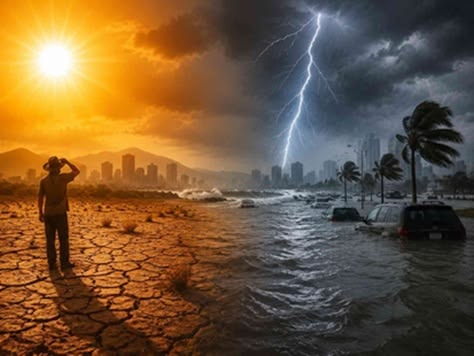
El Niño: The Climate Giant Reshaping Our World
“The climate doesn’t knock before entering. It simply walks in and rearranges our lives.”
Across the globe, communities are experiencing unprecedented climate extremes, including intense heatwaves, devastating floods, prolonged droughts, crop failures, raging wildfires, and worsening water shortages. While climate change remains the primary driver of these events, another powerful natural climate phenomenon is amplifying their intensity, El Niño (FAO 2026).
The current El Niño is forecast to be one of the strongest on record, with impacts expected to persist into 2027. Combined with rising global temperatures caused by greenhouse gas emissions, this event is likely to intensify weather extremes, threatening food security, public health, biodiversity, and economic stability worldwide (FAO, 2026; WFP 2026).
What Exactly Is El Niño?
According to the World Health Organization (WHO): “El Niño is a naturally occurring climate phenomenon that raises temperatures and alters rainfall patterns, making some parts of the world drier and others wetter.”
WHO further explains that El Niño is part of the El Niño–Southern Oscillation (ENSO), a large-scale climate phenomenon involving fluctuations in ocean temperatures in the central and eastern equatorial Pacific Ocean, coupled with changes in the atmosphere. During an El Niño event, sea surface temperatures become warmer than average, disrupting normal weather patterns across many parts of the world. These changes can lead to extreme weather events such as droughts, floods, heatwaves, and storms, with significant impacts on agriculture, food security, water availability, and human health.
EL Nino in Nigeria
In Nigeria, more than 60% of people were estimated to live below the national poverty line in 2025, while even homes with electricity face power cuts. In Sudan, war has destroyed businesses and jobs and damaged power supplies, with an estimated 57% of people living in extreme poverty in 2025. In Niger, 41% lived below the national poverty line in 2021.
Although Nigeria is not directly located within the Pacific region where El Niño originates, it is highly vulnerable to its far-reaching effects. El Niño alters atmospheric circulation and rainfall patterns across West Africa, often leading to erratic weather conditions. In Nigeria, this may manifest as delayed rainfall in some regions, excessive rainfall and flooding in others, rising temperatures, declining crop yields, and increased pressure on already fragile water resources (FAO, 2026).
The implications for Nigeria are particularly concerning because agriculture contributes significantly to rural livelihoods, with more than 80% of farmers being smallholder producers who depend largely on rainfall. Irregular rainfall and prolonged dry spells can reduce the production of staple crops such as maize, rice, millet, and cassava for garri which lis like the most vital food for Nigerians, this effect resulting in higher food prices and worsening food insecurity. In some areas, unseasonal rainfall has also contributed to flash floods, damaging farmlands and increasing post-harvest losses (Punch Newspapers, 2026).
Recent flood disasters further demonstrate Nigeria’s growing climate vulnerability. Heavy rainfall has repeatedly displaced thousands of people, destroyed homes, damaged infrastructure, and submerged hundreds of hectares of farmland. Climate scientists warn that the interaction between El Niño and human-induced climate change increases the likelihood of these extreme weather events becoming more frequent and more severe, making preparedness and climate adaptation increasingly urgent.
Why Is This El Niño Different?
It has already broken records and could be on course to be the strongest in a thousand years. The sea surface temperature of the El Niño region of the Pacific has already reached the previous 2015 high of 3C above average, which is almost unthinkable and it still hasn’t peaked so we won’t know how much higher it will get until the end of the year but measuring the size in comparison with previous El Niños is difficult because the baseline of sea surface temperatures in the eastern tropical Pacific is steadily rising due to global warming.
So there are two things happening – human-driven climate change and the natural variability of El Niño – and it is not easy to say how much each is contributing to the record high ocean temperatures. But together, they make extremes more likely.
Currently temperatures in the eastern Pacific are on course to be 4C above the average, which is far beyond anything seen before. If that trend continues, we could see an incredible El Niño event.
The Global Consequences
Globally El Niño is associated with patterns of weather extremes. More precipitation is expected in some places, while others may receive none at all.
1. Extreme Heat
Extreme heat poses serious risks to human health by increasing cases of heat exhaustion, dehydration, heatstroke, and the worsening of existing health conditions such as cardiovascular and respiratory diseases. Vulnerable populations, including children, older adults, people with chronic illnesses, and outdoor workers, face greater risks because of increased exposure and reduced ability to cope with high temperatures (WHO 2026). Extreme heat also places additional pressure on electricity systems as demand for cooling rises.
2. Flooding and Intense Rainfall
While some regions dry out, others receive excessive rainfall. Heavy downpours overwhelm drainage systems, causing flash floods, landslides, damaged infrastructure, and displacement of communities. Even regions that welcome rainfall after drought can experience destructive flooding when rain falls too quickly.
3. Severe Drought
Many parts of Africa, Southeast Asia, Australia, and Central America often become drier during El Niño. Reduced rainfall lowers river levels, dries up reservoirs, limits drinking water supplies, and leaves farmers struggling to produce food. For countries already battling food insecurity, even one failed growing season can have devastating consequences.
4. Food Insecurity
Agriculture depends heavily on predictable weather. When rains fail or floods destroy crops, food production drops. Livestock suffer from water shortages, fisheries decline due to warming oceans, and food prices rise. The United Nations has warned that millions more people could face hunger if severe El Niño conditions continue.
5. Wildfires
Dry vegetation becomes fuel for massive fires. Countries like Indonesia have already experienced widespread forest fires linked to prolonged dry conditions associated with El Niño. Beyond destroying forests, these fires release enormous amounts of carbon dioxide, further accelerating climate change while exposing millions to dangerous air pollution.
6. Marine Ecosystem Disruption
The ocean also suffers, because warm surface water suppresses the normal rise of nutrient-rich cold water, plankton populations decline. Since plankton form the foundation of marine food chains, fish populations can decrease, affecting fishing communities and global seafood supplies. Coral reefs also become more vulnerable to bleaching during prolonged marine heatwaves.
Africa Is Not Spared
Across Africa, El Niño often produces effects, with some regions experiencing increased rainfall and flooding while others face severe drought conditions. Eastern Africa may experience episodes of above-average rainfall that can trigger flooding, landslides, and disease outbreaks, whereas southern Africa frequently experiences reduced rainfall, drought, and poor harvests during El Niño events (WMO 2023). Reduced agricultural production threatens food security, increases food prices, and places additional pressure on vulnerable communities that depend heavily on climate-sensitive livelihoods. Many African economies rely significantly on rain-fed agriculture, making them particularly vulnerable to changes in seasonal rainfall patterns and prolonged climate extremes (FAO 2023).
Recent climate projections also highlight the growing health risks associated with extreme heat across Africa. Studies estimate that countries such as Nigeria, Sudan, Niger, and Chad could experience substantial increases in heat-related deaths due to rising temperatures, extreme heat exposure, limited cooling access, and vulnerabilities in energy infrastructure. Nigeria is projected to experience one of the highest burdens of heat-related mortality, with thousands of additional deaths expected under high-emission climate scenarios (Zhao et al., 2021). Other regions, including Indonesia and India, are also facing increasing risks from tropical heat stress, agricultural disruption, and extreme wildfire conditions as global temperatures continue to rise (IPPC 2023).
The Human Cost
Climate disasters are more than environmental events—they are humanitarian crises. Families lose homes, children miss school, diseases spread through contaminated water after floods, farmers lose their livelihoods, communities are displaced. UNICEF estimates that hundreds of millions of children could be affected by the current El Niño through hunger, disease, disrupted education, water shortages, and displacement (UNICEF 2026).
Can We Stop El Niño?
No, because El Niño is a naturally occurring climate phenomenon. However, we can reduce its impacts. Governments, communities, and individuals can strengthen resilience by:
- mproving early warning systems.
- Investing in flood control infrastructure.
- Conserving water resources.
- Supporting climate-smart agriculture.
- Protecting forests and wetlands.
- Preparing emergency response plans before disasters occur.
- Reducing greenhouse gas emissions that intensify future climate extremes.
- Preparation saves lives—and costs far less than disaster recovery.
Summary
El Niño serves as a powerful reminder that our planet operates as one connected system. A warming ocean thousands of kilometres away can influence rainfall, agriculture, food prices, and public health across continents. While we cannot prevent El Niño, we are not powerless. Science gives us the ability to anticipate its effects, governments can invest in resilience, and individuals can make choices that support climate adaptation and environmental protection. The question is no longer whether extreme climate events will happen, the real question is whether we will prepare before they do because in a changing climate, preparedness is no longer optional, it is essential.
Reference
- Food and Agriculture Organization. (2026). El Niño is coming: Here is where the risks to agriculture are highest.
- Punch Newspapers. (2026). El Niño threatens Nigeria’s food supply, raises farm costs.
- World Food Programme. (2026). What is El Niño, how does it affect hunger and how does WFP respond?
- World Health Organization (2023) defines El Niño as a naturally occurring climate phenomenon that raises temperatures and alters rainfall patterns, making some regions drier and others wetter.
- World Health Organization. (2026). Heat and health. https://www.who.int/news-room/fact-sheets/detail/climate-change-heat-and-health.
- Food and Agriculture Organization. (2023). The impact of disasters on agriculture and food security. FAO. https://www.fao.org.
- Intergovernmental Panel on Climate Change. (2023). Climate change 2023: Synthesis report. IPCC. https://www.ipcc.ch/report/ar6/syr/
- World Meteorological Organization. (2023). State of the climate in Africa 2022. WMO. https://wmo.int/
- Zhao, Q., Guo, Y., Ye, T., Gasparrini, A., Tong, S., Overcenco, A., Urban, A., Schneider, A., Entezari, A., Vicedo-Cabrera, A. M., Zanobetti, A., Analitis, A., Zeka, A., Tobias, A., Nunes, B., Alahmad, B., et al. (2021). Global, regional, and national burden of mortality associated with non-optimal ambient temperatures from 2000 to 2019: A three-stage modelling study. The Lancet Planetary Health, 5(7), e415–e425. https://doi.org/10.1016/S2542-5196(21)00081-4.
- UNICEF fast facts: Over 347 million children in nearly 100 countries will be exposed to one of the strongest El Niño events on record. United Nations Children’s Fund, 2026.
Written by Godwin Esther