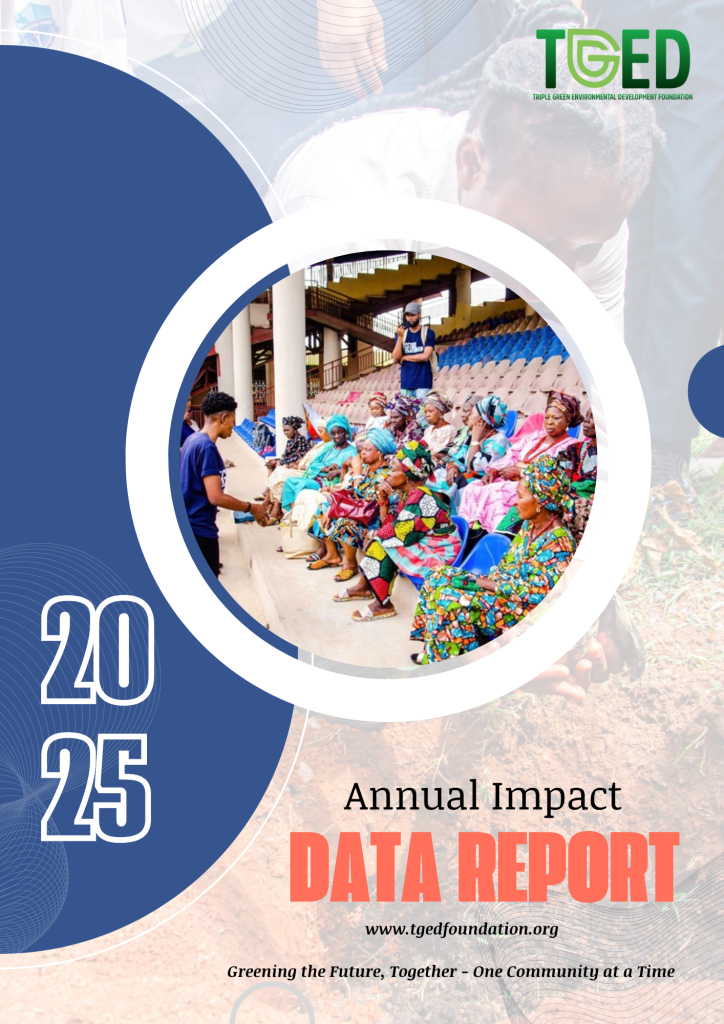

Inspiring Climate Champions in Ekiti: TGED Foundation’s Environmental Outreach at Ifaki Grammar School.
December 2, 2025
COMMUNICATIONS OFFICER (ONSITE – ADO-EKITI)
December 18, 2025
THE GROWING THREAT OF SMOKE FROM WILDFIRES
Across many African countries, especially during the dry harmattan season, smoke from wildfires has become a growing danger that affects daily life in ways many of us can no longer ignore. Every year, we witness bush burning spreading quickly through farmlands and forests, thick smoke hanging in the air, homes destroyed, and families left struggling to breathe. What used to be occasional, localised fires have now escalated into widespread hazards made worse by heat, drought, and human activities. Wildfire smoke is a complex mixture of gases and microscopic particles released when vegetation and other organic materials burn.
Why Wildfire Is Becoming a Bigger Problem
Several factors have contributed to the rise in wildfire smoke across Africa, particularly in West, East, and Southern Africa (Abatzoglou & Williams, 2016; Reid et al., 2016). The long dry spells and dusty harmattan periods dry out grasses, farmlands, and forests, turning them into fuel. Traditional land-clearing methods like bush burning often get out of control. Rapid population growth and expansion into forested areas increase the chances of accidental fires. Climate change has also intensified heatwaves, wind speed, and drought, making it easier for small fires to spread within minutes.
Environmental Effects
Wildfires and smoke degrade land, destroy habitats, and reduce biodiversity. The carbon released worsens global warming, with fires globally releasing over 110 million tonnes of carbon in 2020 alone (GFED, 2021). In Africa, repeated burning strips the soil of nutrients, reduces crop yields, pollutes water sources, and disrupts already vulnerable ecosystems.
For farmers, this means reduced harvests. For communities that depend on forests, it means losing medicinal plants, wildlife, and natural resources.
Social Effects (Health and Daily Life)
The health effects are felt most strongly by children, the elderly, pregnant women, and people with asthma or other respiratory conditions. Even short exposure can cause; Difficulty breathing, Eye irritation, Chest pain, Headaches, Worsening asthma, Long-term respiratory issues.
During harmattan, these symptoms often become more severe because the air is already dry and dusty. Communities with limited access to healthcare feel the impact even more. Schools sometimes struggle to keep children safe, and outdoor workers, farmers, labourers, drivers, face constant exposure.
Beyond health, wildfire smoke disrupts everyday life. Visibility reduces on roads, increasing accidents. Families are forced indoors, and community activities slow down. For many rural communities, the emotional toll of losing farmlands, livestock, or ancestral forests can be deeply distressing.
Economic Effects
The economic losses caused by wildfires and smoke are significant. Across Africa, bush fires destroy homes, shops, farms, stored harvests, and essential infrastructure. Families who depend on farming lose income instantly. Rebuilding homes after fire outbreaks drains savings. Local economies suffer, and food prices rise when farmlands are damaged.
Health-related costs also increase hospital visits, medications for respiratory conditions, and lost productivity due to illness or poor air quality. For vulnerable communities, these impacts can push households further into poverty.
Reducing the Impact: What Measures can be taken
- Environmental Measures
- Improve land management: Promote controlled burns, stop careless bush burning, and restore vegetation to reduce fuel.
- Strengthen climate capacity: Protect forests, reduce emissions, and support climate-smart practices that lower fire risks.
- Better planning: Stop building on fire-prone land and protect natural green areas.
- Social Measures
- Community preparedness: Use early warning alerts, teach communities fire safety, and create simple emergency plans.
- Air quality protection: Use masks, close windows during heavy smoke, and monitor air quality in homes, schools, and clinics.
- Economic Measures
- Stronger building regulations: Encourage fire safe construction to reduce loss of homes and property.
- Invest in prevention: Support climate-smart infrastructure and affordable community fire response tools to avoid costly disasters.
Community Awareness and Responsibility
Protecting communities from wildfire smoke begins with awareness. Individuals need to understand how their daily actions, burning waste, clearing vegetation unsafely, or contributing to pollution, can increase fire risks. Environmental education campaigns, such as those led by TGED Foundation, are essential in helping people recognise the link between climate change, land use, and wildfire hazards.
TGED Foundation works to empower communities with knowledge on environmental stewardship, clean air advocacy, and sustainable practices. Through school outreach, community sensitisation, and public education, the foundation encourages people to take responsibility for their surroundings. Awareness is the first step toward prevention, and prevention is always safer and cheaper than disaster response.
A Shared Commitment
The growing threat of smoke from wildfires is not inevitable. By addressing its root causes, promoting sustainable land use, and strengthening environmental policies, we can protect both people and the planet. With collaboration between governments, local communities, and dedicated organisations like TGED Foundation, it is possible to reduce fire risks, safeguard public health, and build a more evolved environment.
Wildfire smoke may be a growing global challenge, but with the right actions, we can ensure safer, healthier, and more sustainable communities.
REFERENCES
- Abatzoglou, J. T., & Williams, A. P. (2016). Impact of anthropogenic climate change on wildfire across western US forests. Proceedings of the National Academy of Sciences, 113(42), 11770–11775.
- Reid, C. E., Brauer, M., Johnston, F. H., Jerrett, M., Balmes, J. R., & Elliott, C. T. (2016). Critical review of health impacts of wildfire smoke exposure. Environmental Health Perspectives, 124(9), 1334–1343.
- Global Fire Emissions Database (GFED). (2021). Global Fire Emissions Estimates, Version 4.1.
Written by Adesugba Mary