
MARCH 2026 NEWSLETTER
April 7, 2026
Nigeria’s Waste Crisis: What the Data Really Tells Us
Across Nigeria, waste is no longer just a sanitation problem, it’s a complex environmental, public health, economic, and climate challenge. From overflowing dumpsites in major cities to waste clogging drainage channels and polluting waterways, the consequences of poor waste management are visible in every urban centre and many rural communities.
But to understand the scale and urgency of the crisis, we must look beyond what we see on the streets and ask: What does the data actually tell us?
Waste Generation Across Nigeria: The Numbers
Nigeria, with over 200 million people and one of the fastest urbanization rates in Sub-Saharan Africa, generates more than 32 million tonnes of solid waste annually, much of which remains uncollected or is disposed of improperly (Ogbonna et al., 2007; Ogwueleka, 2009). The World Bank (2019) projects that waste generation in countries such as Nigeria will triple by 2050, reflecting demographic expansion and rising consumption.
In urban centres, average waste generation rates fall between 0.51 kg and 0.65 kg per person per day, reflecting rising consumption, urbanisation, and changing lifestyles.
When extrapolated to Nigeria’s fast-growing urban population, these rates contribute to millions of tonnes of waste each year, placing immense pressure on existing collection and disposal systems. The same studies indicate that organic materials (such as food and green waste) can comprise 50 %–70 % of the municipal waste stream, underscoring both the scale of organic waste and the opportunity for resource recovery.
The Composition of Waste Matters
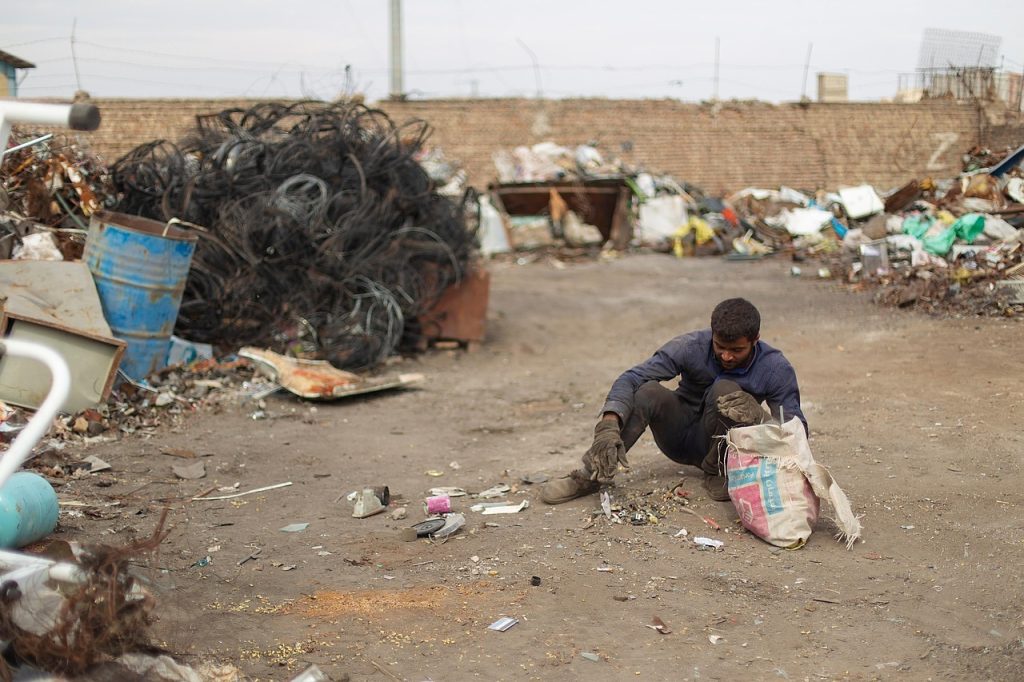
Research on municipal solid waste composition in Nigerian cities shows that waste is not just abundant it is dominated by biodegradable organic materials, with significant implications for environmental strategies and circular solutions.
For example, a detailed analysis of waste from Uyo, Akwa Ibom State found that organic materials constituted 73.7 % of the total municipal solid waste, while plastics and polythene accounted for only about 12.9 % of the waste stream.
These figures confirm two important realities:
- A large proportion of urban waste in Nigeria is biodegradable, making it suitable for composting and resource recovery.
- Plastics and synthetic materials do persist, but they form a much smaller share of the total waste by weight, reflecting the mixed nature of household refuse in cities.
This evidence shows that waste management in Nigeria is not just about reducing volume it is about understanding what is being thrown away and how those materials can be better managed or repurposed through circular economy practices.
Low Recycling Rates Exacerbate the Problem
While Nigeria produces millions of tonnes of waste yearly, recycling rates remain very low. A 2025 report indicates plastic waste; estimated at over 1.5 million tonnes per year is mostly unrecycled, with less than 10 % actually processed through formal recycling channels.
Low recycling rates mean that most materials end up in open dumps, drainage channels, waterways, or are burned in the open; a practice that not only pollutes the environment but also contributes harmful greenhouse gases and toxins to the air.
Informal Actors Are the Hidden Backbone of Waste Recovery
Much of Nigeria’s waste recovery work is done by informal waste collectors and recyclers. These actors: often unregistered and without formal support, recover valuable materials from mixed waste streams and sell them for income. This informal economy is a key part of material recovery in cities, yet it operates outside of formal policy recognition and support structures.
This reveals a critical governance gap: the systems meant to manage waste exclude the very people contributing most to waste recovery and recycling.
The Data Signals a Climate and Public Health Emergency
Waste mismanagement is not just an aesthetic or infrastructure concern; it affects climate outcomes and public health:
- Decomposing organic waste emits methane, a potent greenhouse gas.
- Open burning of waste releases toxic pollutants that harm air quality.
- Blocked drainage systems contribute to flooding, which spreads waterborne diseases.
- Unmanaged dumpsites attract pests and contaminate soil and water.
This data paints a picture of a nation whose waste crisis intersects directly with atmospheric pollution, urban flooding, and long-term climate impacts.
What the Data Really Tells Us
When we examine the numbers closely, several clear conclusions emerge:
- Waste generation is massive and rising; the country produces tens of millions of tonnes annually.
- Formal collection and recycling systems capture only a fraction of this waste.
- Organic and plastic wastes dominate waste streams, but recycling infrastructure and behaviour lag far behind.
- Informal systems are doing much of the waste recovery work yet lack policy support and inclusion.
These data trends confirm what many Nigerians already see on the ground: the current waste management system is inadequate and unsustainable without structural reform and widespread behaviour change.
Towards Sustainable Community Action
To shift from crisis response to long-term resilience, Nigeria needs to combine policy reform with grassroots engagement:
- Segregation at source to improve recycling efficiency
- Support for informal waste workers through formal recognition and incentives
- Investment in recycling infrastructure and composting facilities
- Public awareness and behavioural change campaigns
- Circular economy planning that turns waste into resources
Ultimately, data alone won’t change outcomes, but it can guide targeted action.
Conclusion
Nigeria’s waste crisis is not abstract. The data shows it clearly, from high per capita waste generation and dominant organic fractions to low recycling capacity and inadequate infrastructure.
But the data also points to opportunity: organic waste can be composted, recyclable materials can be recovered, and existing informal systems can be upgraded and empowered.
Turning data into action through community engagement, policy innovation, and behavioural change is essential if Nigeria will move from crisis management toward sustainable waste governance.
References
- Municipal solid waste profiles and composition data: https://www.sciencedirect.com/science/article/pii/S2211464525002295
- Ogbonna et al., 2007. Urban solid waste generation in Port Harcourt metropolis and its implications for waste management. Manag. Environ. Qual., 18 (1) (2007), pp. 71-88, 10.1108/14777830710717730
- Physical Composition of Municipal Solid Waste and Nutrient Contents of Its Organic Component in Uyo Municipality, Nigeria. N. M. John et al, Pg189-194 https://doi.org/10.1080/01904160500464836
- Plastic waste production and low recycling rates —
The Cable: Nigeria’s waste and public health context
https://www.thecable.ng/waste-and-public-health-in-nigeria-the-silent-crisis-we-can-no-longer-ignore/?utm_source=chatgpt.com - Ogwueleka T. Municipal solid waste characteristics and management in Nigeria. Iran. J. Environ. Health Sci. Eng., 6 (3) (2009), pp. 173-180. Available at:https://www.bioline.org.br/pdf?se09026
- Waste generation and recycling systems analysis: https://www.mdpi.com/2076-3298/12/6/209
- World Bank 2019. What a Waste 2.0: a Global Snapshot of Solid Waste Management to 2050. Urban Development Series. World Bank, Washington, DC (2019), 10.1596/978-1-4648-1329-0
Written by: Olalekan Adeyanju